WELDING / FIXED TABLE
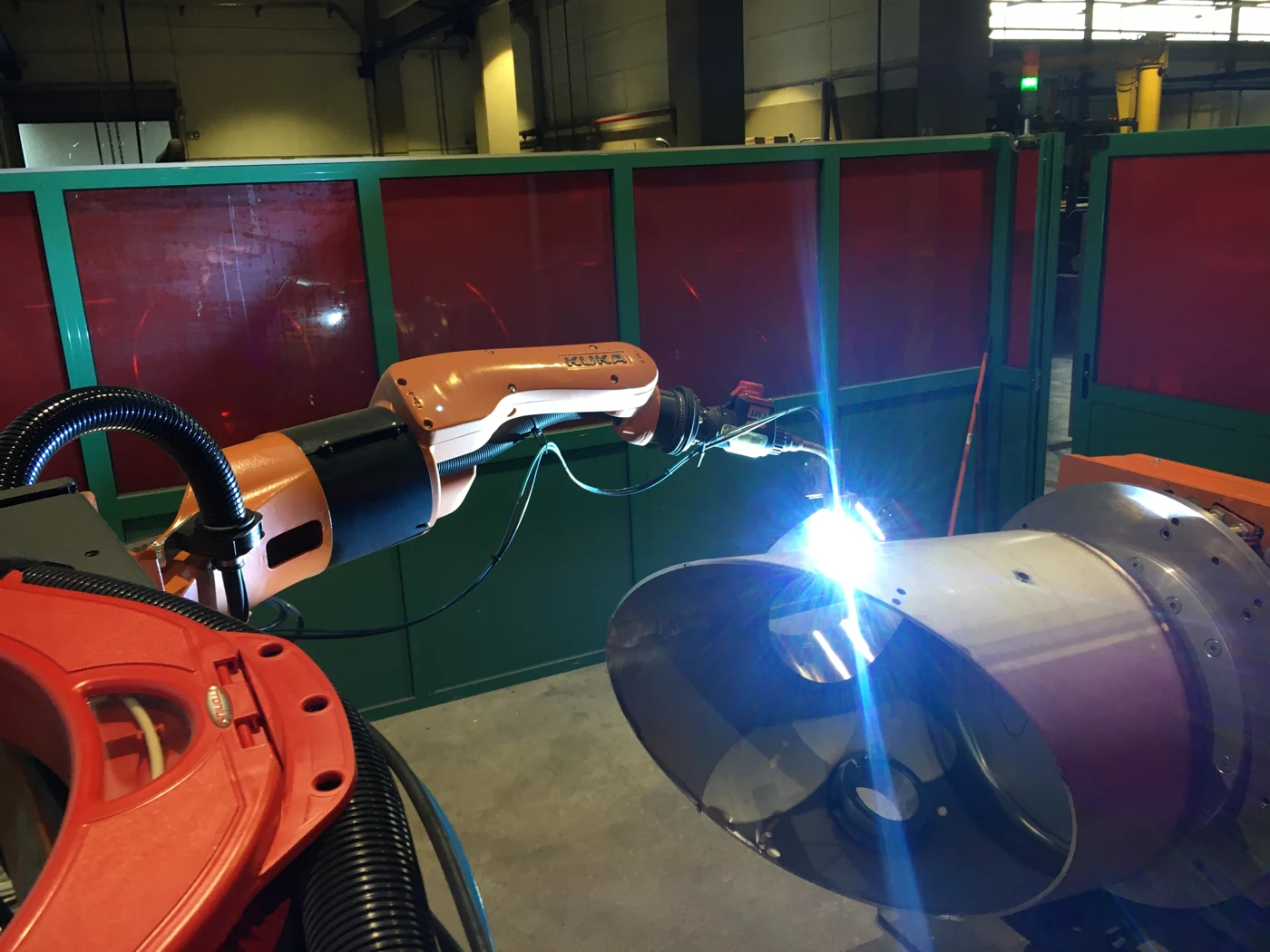
Fixed-table welding cell
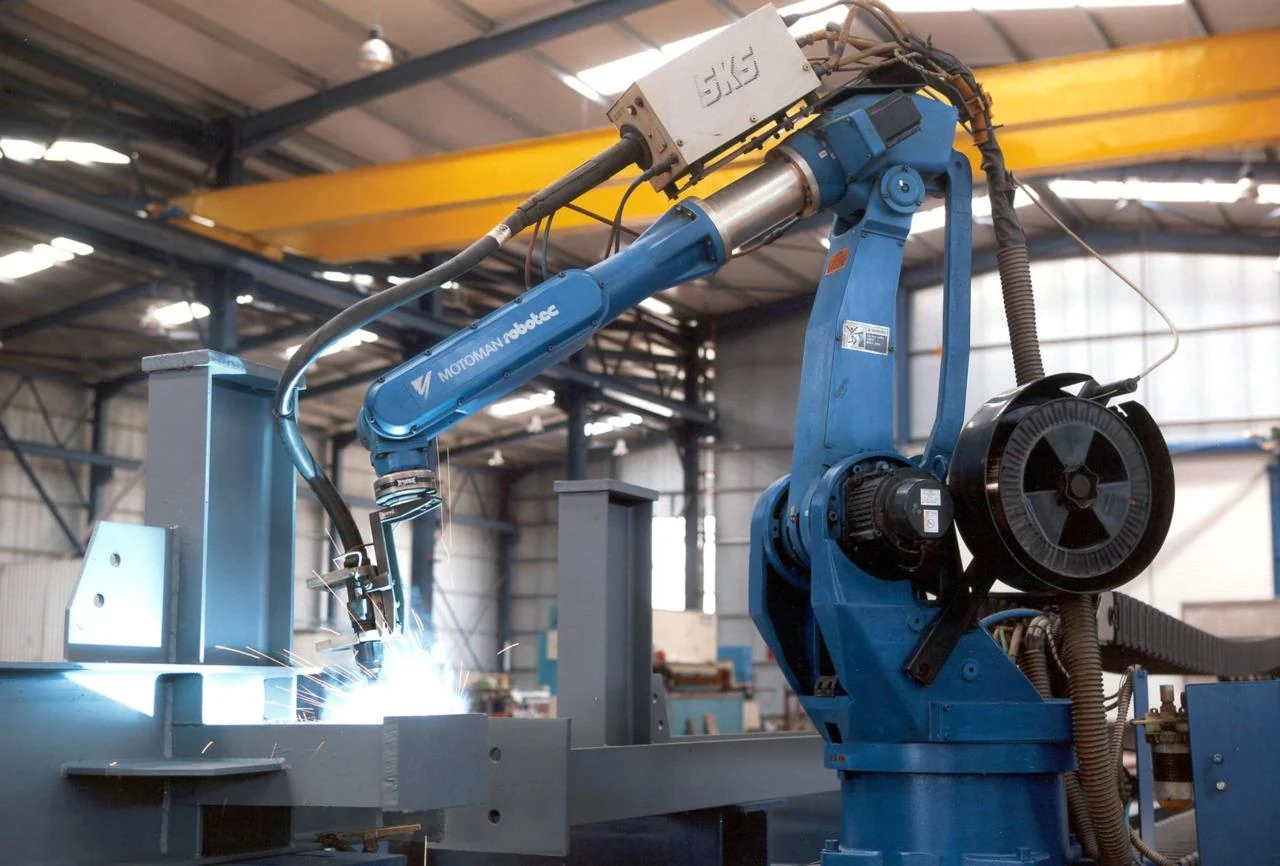
An integrated arrangement for frames and fabrications held in a fixed position.
- Layout
- Robot + worktable
- Workpieces
- Frames / fabrications
- Configuration
- Application-specific
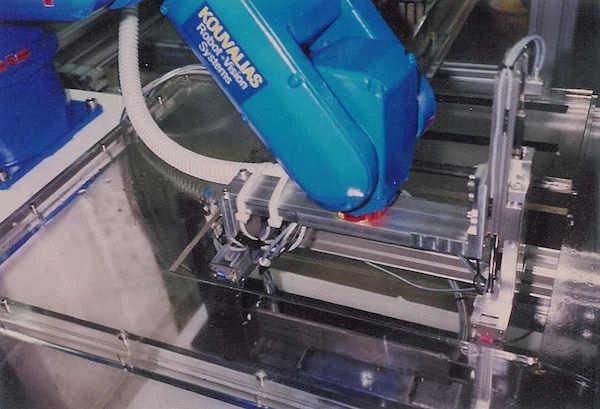
We design and install robotic welding, palletizing and part-handling systems. We integrate machine vision, peripheral equipment and control systems.
Experience in
system integration.
We assess the process, required cycle time and material flow. We configure individual robotic cells or integrated installations to meet the application requirements.
 01
Fixed-table cells, positioners and linear-axis arrangements.
 02
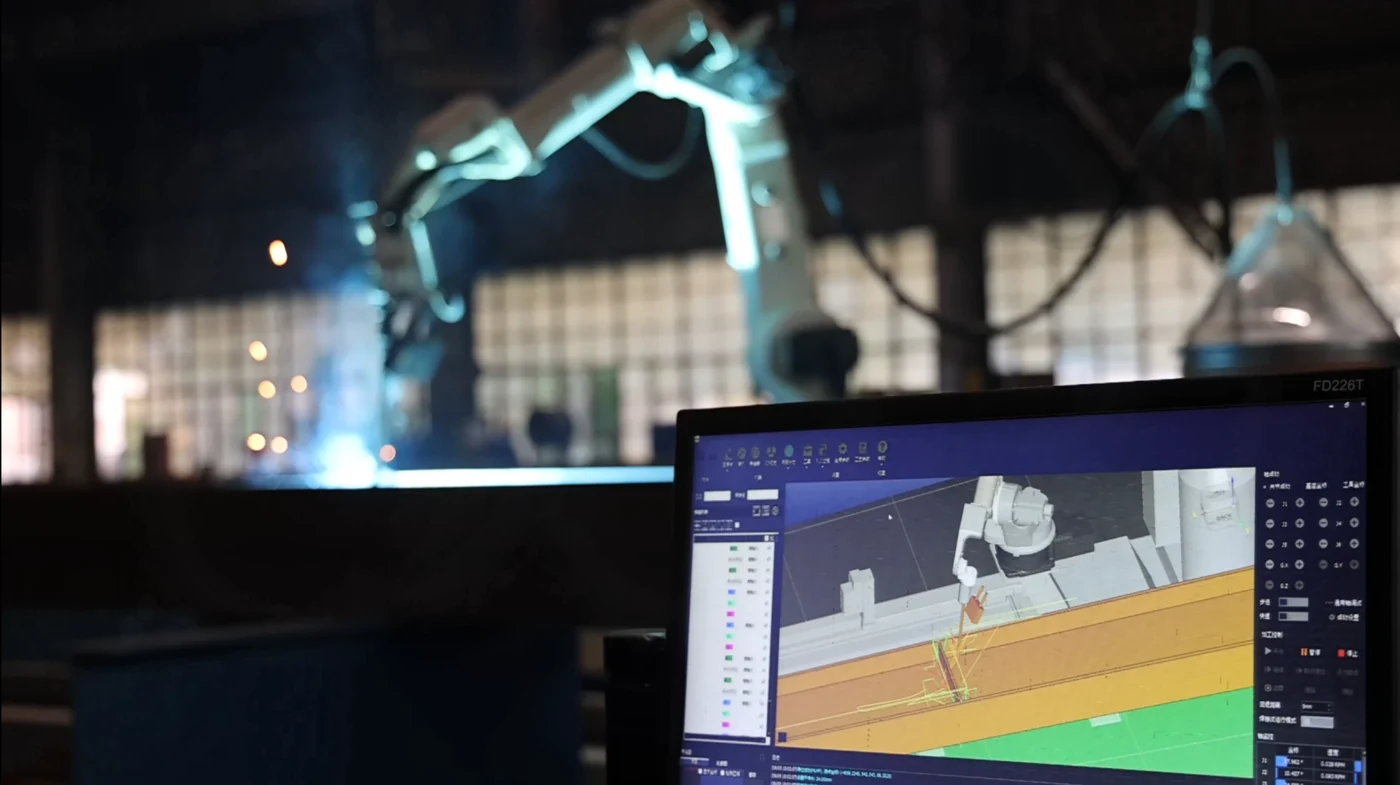
Workpiece scanning, seam selection and welding without manually writing robot motion code.
 03
Cobot, Lite IRMM, Pro IRFS and multi-station IRML.
 04
Part handling, machine tending and application-specific processes.
Established welding and palletizing architectures. We select the configuration and integrate the system around your workpiece, cycle and production line.
An integrated arrangement for frames and fabrications held in a fixed position.
The workpiece is reoriented to give the robot access to the required welding faces.
An extended work envelope for long fabrications and multiple welding positions.
Collaborative palletizing for smaller production units and frequent product changes.
A compact industrial cell with manual pallet handling.
Automation from product infeed through to pallet wrapping.
Multi-station palletizing with automatic stacking-pattern changes.
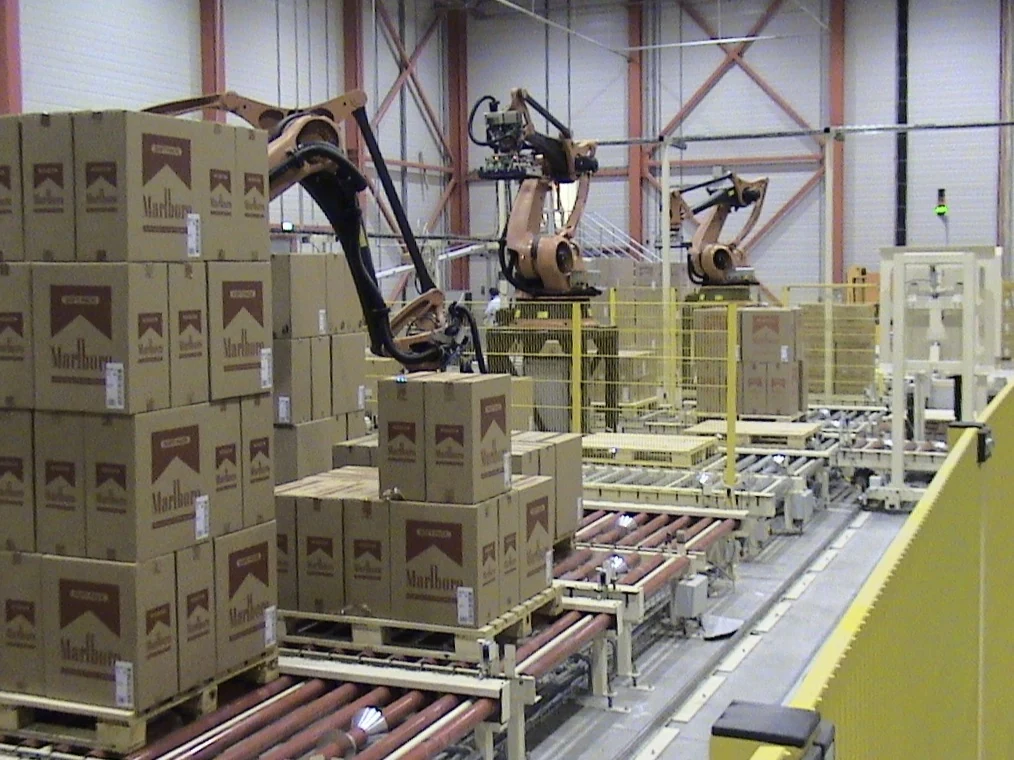
An installed system with robotic case palletizing, multiple pallet stations, automatic pallet transfer and central line monitoring.
Open video ↗The video could not start. Please try again or select “Open video”.
| Parameter | Cobot | Lite · IRMM | Pro · IRFS | Pro · IRML |
|---|---|---|---|---|
| Nominal robot payload | 30 kg | 120 kg | 120 kg | 120 kg |
| Published cycle rate | 8 / min | 20 / min | 20 / min | 12 / min |
| Pallet handling | Layout-dependent | Manual | Automatic | Multiple stations |
| Primary use | Frequent changes | Compact footprint | Full end-of-line | Multiple zones |
Payload figures refer to the robotic arm; gripper mass is included in sizing. Cycle rates are published reference values; the actual cycle depends on product, travel and pattern.
Robotic welding without manually written code. For metal fabrication, small batches and production with many different workpieces.
Watch the robot scan the workpiece and execute the weld, followed by close-ups of the finished seams. This video has no audio.
Open video ↗The video could not start. Please try again or select “Open video”.
Positioning of the workpiece in the work area.
Acquisition of the actual workpiece geometry.
Seam selection in the software.
The robot executes the weld job.
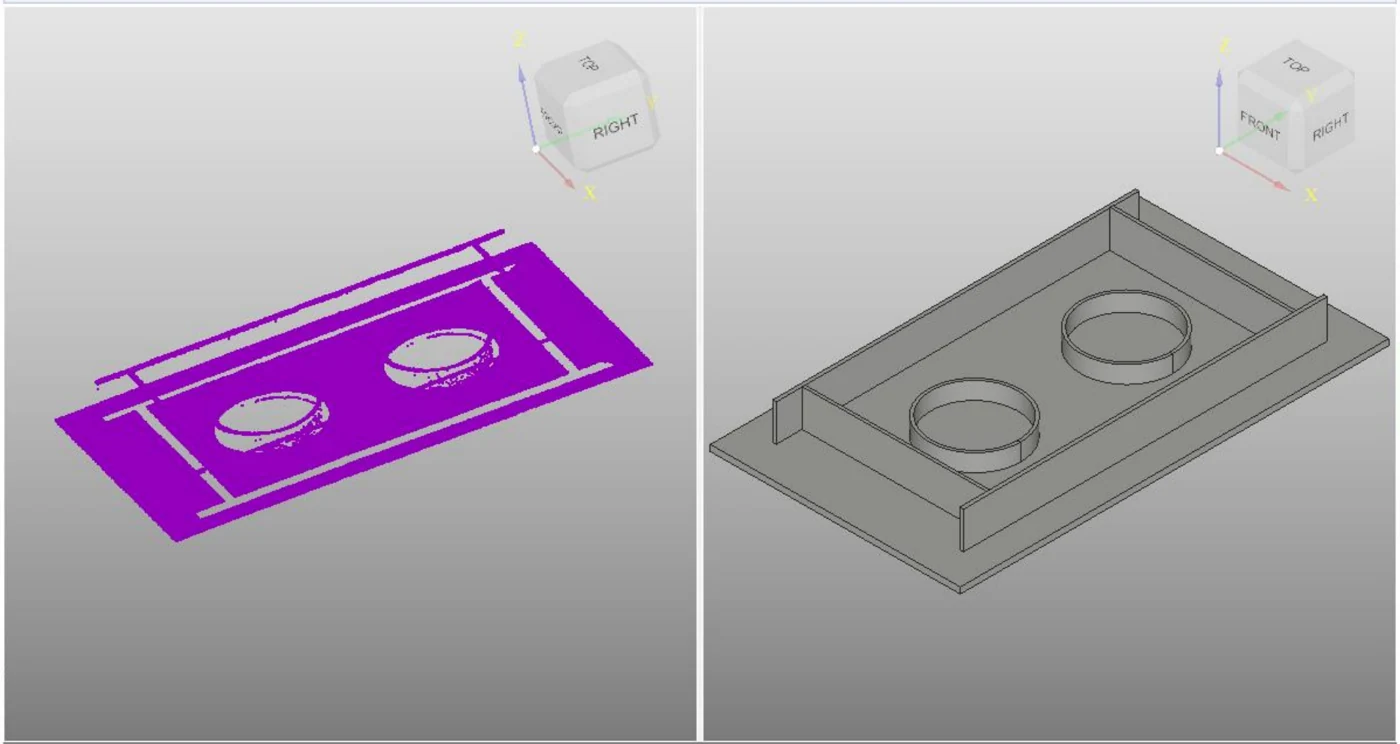
The system scans the workpiece and captures its geometry in the working interface.
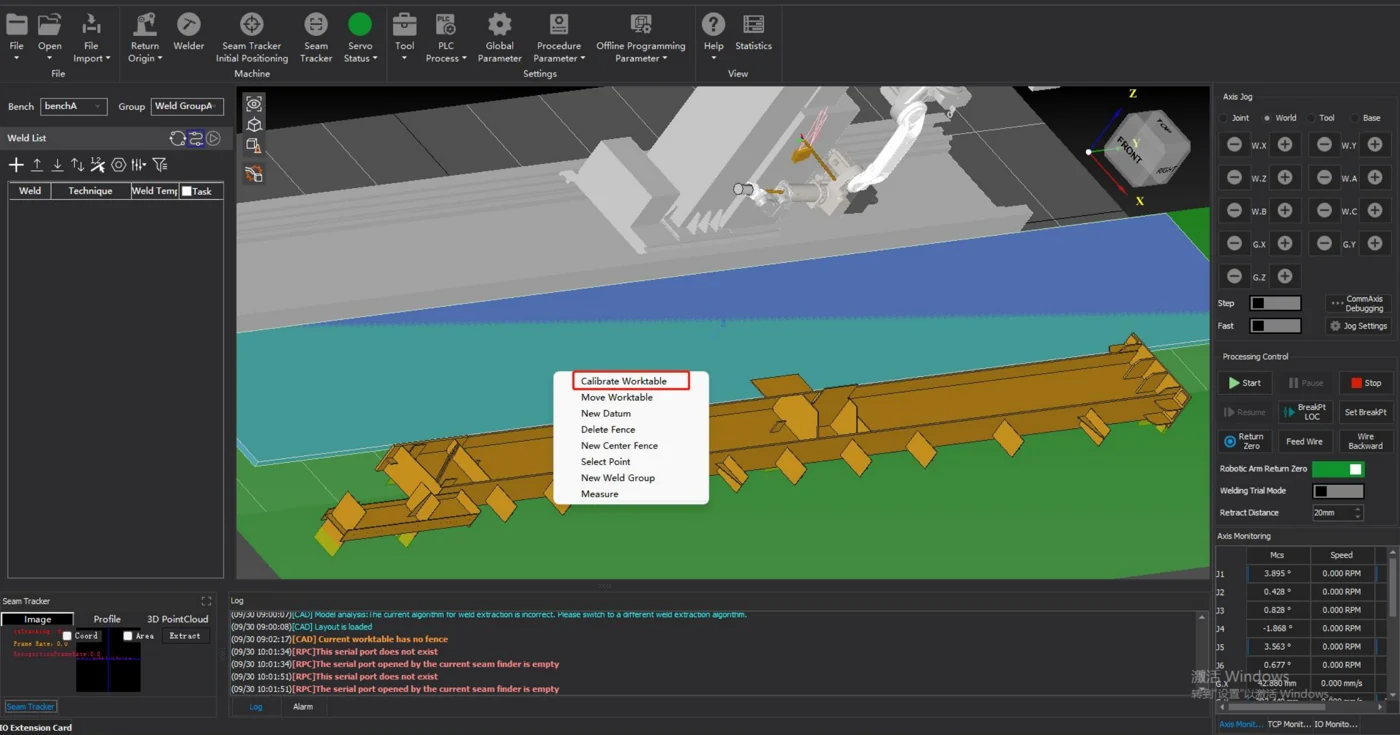
The operator selects seams in the software instead of writing motion code for each new path.
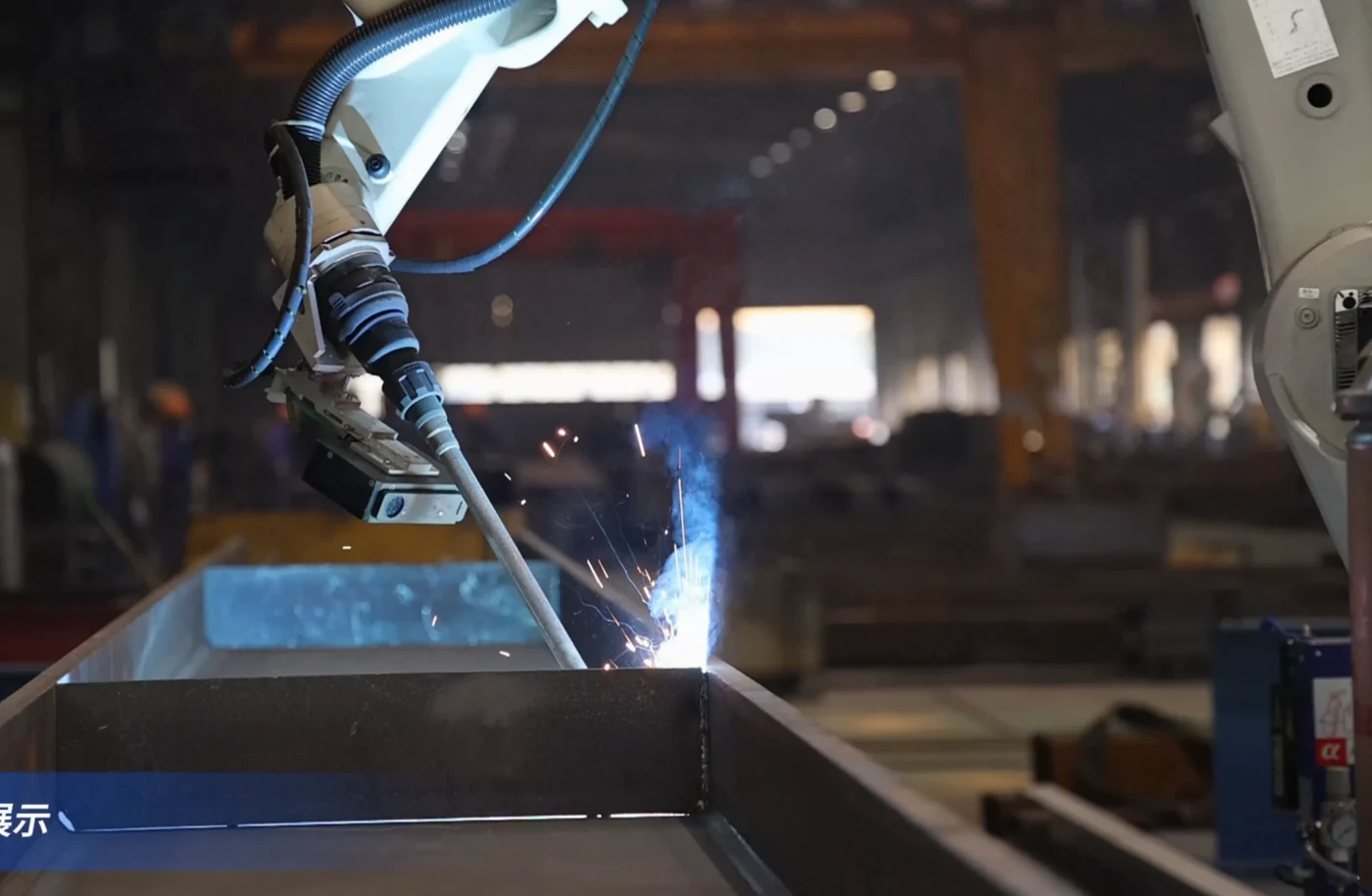
The robotic system executes the job. Part preparation and welding parameters remain part of application setup.
Structural parts · machine bases · tanks · shipbuilding structures
Robot selection is one part of the study. Performance comes from the combination of process, mechanical layout and production flow.
Material, thickness, joint geometry, assembly tolerances and target quality define the starting point for engineering.
We assess torch access, part positioning and motion space, selecting a table, positioner or linear axis for the application.
The total cycle includes loading, travel, processing and unloading. Palletizing also requires gripper, pattern and pallet-exchange assessment.
Electrical design, equipment interfaces, functional checks, training and technical support complete the installation.
| Technology | Conventional robotics | No Programming Welding | TALOS.EasyPath |
|---|---|---|---|
| How the path is defined | Teaching / programming | Scanning and seam selection | Tracking the actual seam |
| When it is used | Robot job preparation | Workpiece job creation | During welding execution |
| What it addresses | Repeatable geometry | Frequent changes / small batches | Seam position and geometry variations |
Technology selection and combination are assessed for the application, robot controller and workpiece geometry.
TALOS.EasyPath
Using laser triangulation, EasyPath measures seam position, gap and orientation. The vision controller processes the geometry and transmits corrections to the robot controller during welding.
An optical line of sight to the seam is required. System performance is assessed for the material and joint geometry of the application.
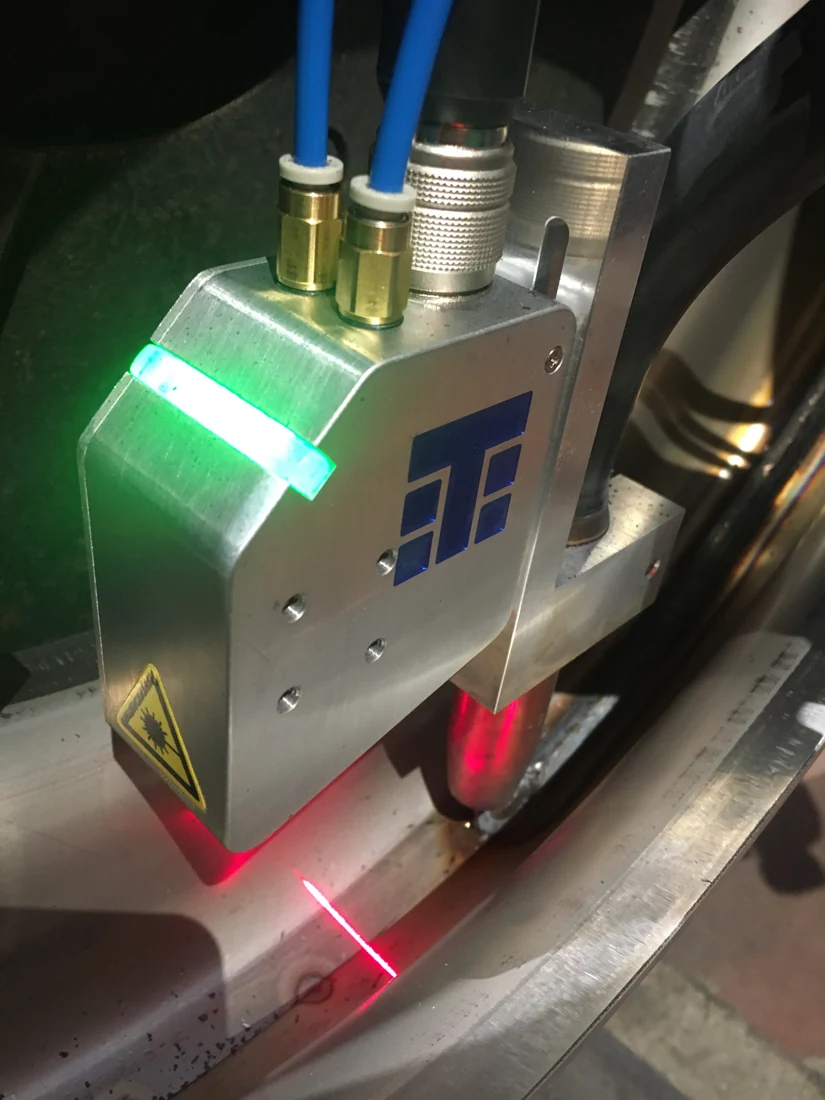
Actual footage of TALOS.EasyPath mounted on the robot, before and during welding. The close-up shows the laser line at the joint.
Open video ↗The video could not start. Please try again or select “Open video”.
Selected installations for welding, palletizing, part handling and laser seam tracking.
We undertake mechanical and electrical design, equipment integration, programming and commissioning. Project delivery includes operator training and technical support.
Discuss your applicationWe analyse the workpiece, production cycle and available space, select the equipment and develop the mechanical and electrical design.
We assemble and install the system at your facility, with functional checks and commissioning.
We program the application and train your team in cell operation and programming.
We support your production with maintenance, reprogramming and adaptation to new requirements.
KOUVALIAS Robotics evolves into TALOS Robotics. We bring our robotic integration experience and Talos Robot Vision’s laser seam tracking technology together under one identity.
Active in Greek and European industry since 1992, we provide engineering, installation and technical support for industrial automation systems.
Describe the product, process and required throughput so that we can assess the appropriate system configuration.
+30 210 9510170 sales@kouvalias.eu